EN
EN

Choosing between fruit fillings and fruit puree depends on the product application, processing requirements, and the desired consumer experience. Fruit fillings are generally the better choice for bakery products that require visible fruit pieces, stable texture, and controlled placement, while fruit puree is more suitable for beverages, dairy products, sauces, and applications requiring smooth flavor distribution.
For manufacturers, the decision is not simply about fruit content—it involves factors such as viscosity, heat stability, shelf life, processing compatibility, and final product positioning. Understanding the differences between these two fruit ingredient formats helps food producers select the right solution for consistent quality and production efficiency.
The main difference between fruit fillings and fruit puree lies in their texture, formulation, and intended use.
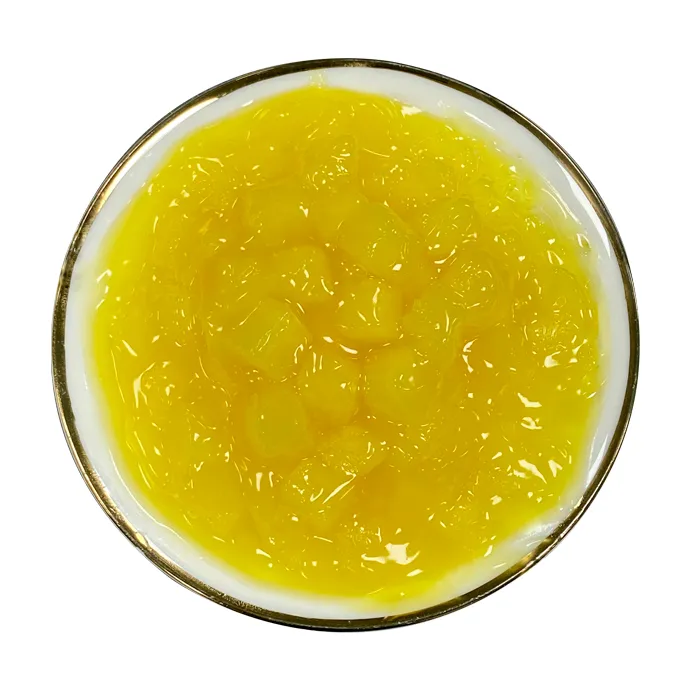
Fruit fillings are prepared fruit-based ingredients designed to provide a thick, stable structure. They typically contain fruit pieces or particles combined with sweeteners, stabilizers, and other functional ingredients to maintain consistency during baking, freezing, or storage. They are widely used as layers, toppings, or inclusions in bakery and dessert products.
Fruit puree is a smooth fruit preparation made by crushing and refining whole fruits. It retains natural fruit flavors, colors, and nutrients while creating a uniform texture. Because of its flowability and easy blending characteristics, fruit puree is commonly used in beverages, yogurt, ice cream, and fruit-based sauces.
| Feature | Fruit Filling | Fruit Puree |
|---|---|---|
| Texture | Thick, chunky, or semi-solid | Smooth and uniform |
| Main function | Filling, topping, visible fruit inclusion | Flavor base and fruit integration |
| Processing stability | High stability in baking and layered products | Excellent blending performance |
| Typical applications | Cakes, pastries, pies, desserts | Drinks, yogurt, smoothies, sauces |
| Consumer experience | Fruit pieces and texture contrast | Natural fruit flavor and smooth mouthfeel |
For bakery production, fruit fillings are usually the preferred option because they are specifically developed to withstand baking conditions while maintaining texture, flavor, and appearance.
Products such as pies, Danish pastries, cakes, muffins, and cookies require fruit ingredients that can remain in place during processing. A high-quality fruit filling provides:
Controlled viscosity to prevent leakage during baking
Stable fruit distribution throughout the product
Attractive visual appearance with fruit pieces
Improved shelf-life performance
Consistent portion control for industrial production
For example, bakery manufacturers producing fruit-filled pastries often require ingredients that resist water migration between fruit and dough. Specialized fruit fillings help maintain product structure while delivering a fresh fruit experience.
However, fruit puree can also be valuable in bakery applications, especially when manufacturers need natural fruit flavor throughout the dough or batter. It is commonly used in:
Fruit-flavored cakes
Sponge cakes
Muffin batters
Dessert creams
The choice depends on whether the goal is visible fruit texture or overall fruit flavor enhancement.
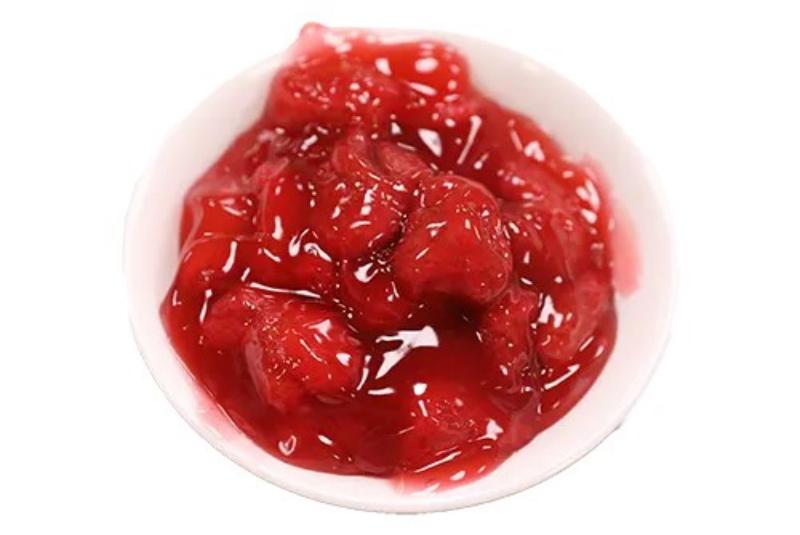
For beverage and dairy manufacturers, fruit puree is often the more suitable ingredient because it integrates easily into liquid and semi-liquid systems.
Fruit puree provides:
Natural fruit taste and aroma
Smooth mouthfeel
Consistent color distribution
Easy mixing with milk, water, or other beverage bases
It is widely used in:
Fruit juices
Smoothies
Yogurt drinks
Milk-based beverages
Ice cream
Fruit sauces
In dairy applications, fruit puree helps manufacturers create products with authentic fruit characteristics while maintaining a consistent texture. For yogurt producers, for example, puree can be blended into the dairy base or added as a fruit layer depending on the desired product style.
For beverage production, viscosity control is especially important. A properly processed puree ensures stable suspension, prevents separation, and supports a better drinking experience.
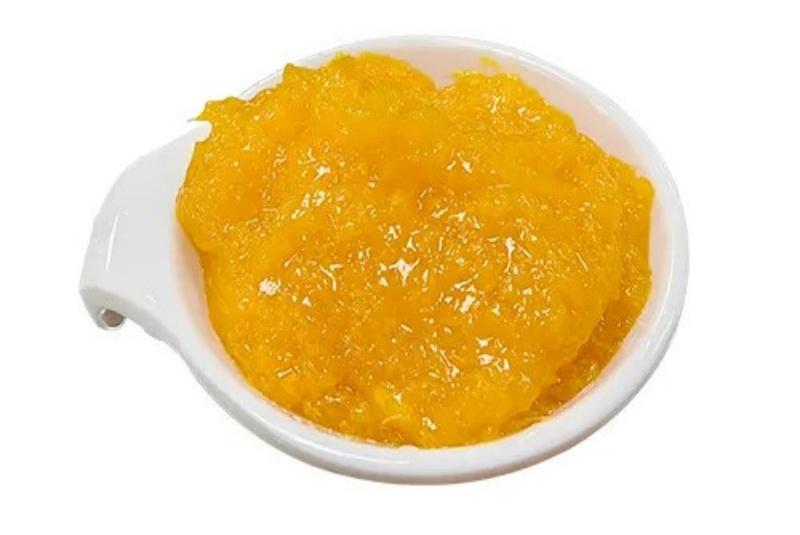
Food manufacturers should evaluate several technical factors before selecting a fruit ingredient format.
The first consideration is the final product format.
Choose fruit fillings when the product requires:
Visible fruit pieces
Layered structures
Thick texture
Controlled placement
Choose fruit puree when the product requires:
Smooth consistency
Easy blending
Uniform fruit flavor
Liquid or semi-liquid processing
Different production processes require different ingredient stability.
Fruit fillings are designed to perform under conditions such as:
High-temperature baking
Freezing and thawing cycles
Long storage periods
Fruit puree is better suited for:
Mixing systems
Pasteurization processes
Beverage homogenization
Dairy fermentation environments
Shelf stability is another critical factor.
Industrial fruit ingredients must maintain:
Color stability
Flavor retention
Microbial safety
Texture consistency
Manufacturers should work with experienced fruit ingredient suppliers that can provide customized formulations based on processing conditions and storage requirements.
Yes. Many innovative food products combine fruit fillings and fruit puree to create multiple sensory experiences.
Examples include:
A cake may use fruit puree inside the batter for overall flavor while adding fruit filling as a center layer to create a stronger fruit sensation.
Yogurt products can combine puree for natural fruit distribution with fruit filling for a premium layered appearance.
Fruit puree can provide the main flavor profile, while thicker fruit preparations can create texture variation or decorative effects.
Using both formats allows manufacturers to balance taste, appearance, texture, and product differentiation.
Fruit puree usually has a simpler fruit-based composition and preserves natural fruit characteristics, while fruit fillings are formulated for specific functional purposes such as stability and texture. The nutritional profile depends on the fruit type and formulation used.
Fruit puree can replace fruit filling in some bakery applications, but it may not provide the same structure or stability. Products requiring a thick center layer or visible fruit pieces typically perform better with specialized fruit fillings.
Shelf life depends on processing methods, packaging, formulation, and storage conditions. Commercial fruit ingredients are usually processed under controlled conditions to ensure stability throughout the intended product lifecycle.
Manufacturers can improve fruit flavor by selecting high-quality fruit ingredients, optimizing fruit concentration, controlling processing temperatures, and choosing the appropriate format—such as fruit puree for flavor integration or fruit fillings for concentrated fruit impact.
The choice between fruit fillings and fruit puree depends on the role the ingredient plays in the final product. Bakery manufacturers often prefer fruit fillings for structure, stability, and visible fruit texture, while beverage and dairy producers frequently choose fruit puree for smooth integration and natural fruit flavor.
For food companies developing new products, selecting the right fruit ingredient format can improve processing efficiency, consumer appeal, and product consistency. Working with an experienced fruit-based ingredient supplier ensures the ingredient solution matches the technical demands of modern food production.
 The Salad Dressing Guide for Types, Uses, Ingredients and SelectionMay 15, 2026Salad dressing is more than just a condiment—it is the defining element that transforms a simple bowl of greens into a flavorful, marketable, and memorable dish. In today’s global food industry, the...view
 How to Evaluate Bake-Stable Fruit Filling: Temperature, Viscosity and Shape RetentionJuly 31, 2026A high-quality bake-stable fruit filling should maintain its flavor, structure, and appearance throughout the entire baking process. The most important evaluation factors are temperature stability, vi...view
 Types of Fruit Fillings for Cakes and Pastries: Bake-Stable, Whole-Fruit, Chopped and SmoothSeptember 8, 2026Fruit fillings for cakes and pastries are mainly divided into four categories: bake-stable fruit fillings, whole-fruit fillings, chopped fruit fillings, and smooth fruit fillings. Each type is designe...view
 How to Choose the Right Fruit Filling for Bakery Products: A Complete Guide for Food ManufacturersAugust 18, 2026Choosing the right fruit filling for bakery products requires evaluating more than flavor. Food manufacturers should consider baking stability, viscosity, fruit content, processing compatibility, shel...view
 How to Choose Baking IngredientsMay 15, 2026Choosing the right baking ingredients is one of the most critical decisions for any bakery, food manufacturer, or industrial production line. Whether you are developing cakes, bread, pastries, or froz...view
 Easy Cream Cheese Filling Recipe for Cakes, Pies and PastriesMay 15, 2026Cream cheese filling is one of the most versatile dessert components in modern baking. Smooth, rich, slightly tangy, and incredibly creamy, it adds depth and texture to cakes, pastries, pies, cupcakes...view