EN
EN

A high-quality bake-stable fruit filling should maintain its flavor, structure, and appearance throughout the entire baking process. The most important evaluation factors are temperature stability, viscosity control, and shape retention. These properties determine whether fruit fillings can withstand high baking temperatures without leaking, breaking down, or negatively affecting the final product texture.
For industrial bakery manufacturers, selecting the right fruit filling requires more than evaluating taste. Performance during mixing, filling, baking, cooling, and storage directly impacts production efficiency and consumer acceptance.
A bake-stable fruit filling is specially formulated to maintain its physical and sensory properties under high-temperature processing conditions. Unlike ordinary fruit preparations, bake-stable fillings are designed to resist:
Moisture migration into dough or pastry layers
Texture breakdown during heating
Separation of fruit solids and liquid phases
Color and flavor degradation
Structural collapse after cooling
The stability of fruit fillings depends on several technical factors, including fruit composition, sugar concentration, pectin or hydrocolloid systems, particle size, and processing technology.
For bakery applications such as pies, Danish pastries, cookies, and filled cakes, the filling must remain in the intended position before, during, and after baking.
Temperature resistance is one of the most important indicators when evaluating bake-stable fruit fillings.
During baking, fillings are commonly exposed to temperatures ranging from approximately 160°C to 220°C depending on the product type and baking conditions. However, the internal temperature of the filling is usually lower because moisture evaporation creates a cooling effect.
A reliable fruit filling should demonstrate:
The filling should maintain its consistency without excessive thinning or separation when exposed to heat.
Poor temperature stability may cause:
Filling leakage from pastries
Uneven fruit distribution
Reduced product appearance
Excess moisture affecting the dough structure
High temperatures can accelerate flavor loss and color changes. Premium fruit fillings are processed to preserve:
Natural fruit aroma
Fresh fruit color
Balanced sweetness and acidity
Manufacturers should conduct baking simulation tests using actual production conditions rather than relying only on laboratory measurements.
Viscosity determines how easily a fruit filling can be processed and how well it remains stable inside baked products.
The ideal viscosity depends on the application.
| Application | Required Filling Characteristics |
|---|---|
| Pie and tart filling | High viscosity with strong structure |
| Pastry injection filling | Smooth flow with controlled thickness |
| Cake layers | Stable texture with easy spreading |
| Cookie filling | Good shape retention and low leakage |
A filling with insufficient viscosity may spread during baking, while excessive viscosity can create processing difficulties during pumping, dosing, or filling.
Professional evaluation should consider:
Viscosity before baking
Viscosity changes after heating
Flow behavior during production
Texture after cooling
The goal is to achieve a balance between processability and final product stability.
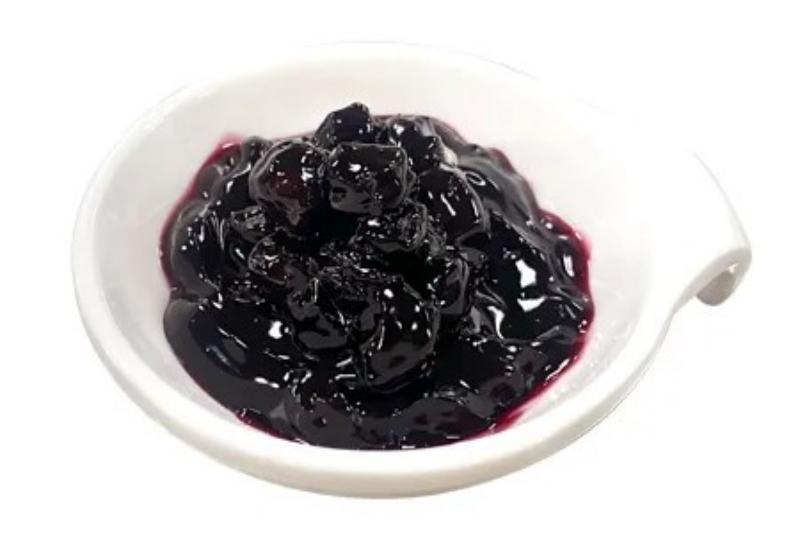
Shape retention measures whether a fruit filling stays where it is placed after baking.
This is especially important for products where appearance influences purchasing decisions, such as:
Fruit danishes
Filled croissants
Layer cakes
Premium pastries
Bakery desserts
Effective testing methods include:
The filling is placed into a representative dough or pastry system and baked under commercial conditions.
Manufacturers evaluate:
Filling spread
Leakage level
Edge stability
Volume changes
Some fillings perform well during baking but lose structure after cooling. Cooling tests help evaluate:
Gel strength
Water retention
Long-term appearance
Finished products should be monitored during storage to determine whether the filling maintains:
Original position
Texture consistency
Moisture balance
A reliable fruit filling supplier should provide technical support and application testing before large-scale production.
The formulation of fruit fillings directly influences their performance during baking.
Common functional ingredients include:
Pectin helps create a stable gel structure while maintaining a natural fruit texture. It is widely used in fruit-based applications requiring good heat resistance.
Modified starches improve viscosity and help prevent separation during heating.
Hydrocolloids support water management and improve texture stability during processing and storage.
Sugar concentration and acidity affect:
Gel formation
Flavor balance
Preservation
Texture development
A professional formulation requires careful adjustment of these components according to the target application.
Selecting the right filling solution requires evaluating both product requirements and production conditions.
Manufacturers should analyze:
Baking temperature
Baking time
Product thickness
Heating method
A filling designed for short baking cycles may not perform well in longer, high-temperature applications.
Industrial production requires fillings that work smoothly with:
Depositing machines
Pumps
Filling nozzles
Automated production lines
Consistency in viscosity helps reduce production interruptions and improve efficiency.
Different bakery products need different filling characteristics.
For example:
Premium pastries may require visible fruit pieces and strong shape retention
Industrial cookies may require precise dosing and low moisture migration
Cakes may require softer texture and easy spreading
Choosing a customized fruit filling solution ensures better performance and product quality.
Filling leakage is usually caused by insufficient viscosity, poor heat stability, or excessive moisture release. The filling formulation must be optimized to maintain structure under baking conditions.
High temperatures can weaken the structure of improperly formulated fillings. Using suitable stabilizers and controlling solids content helps maintain consistency.
Shape loss may occur when the gel system does not recover properly after heating. Proper selection of gelling agents and cooling stability testing can prevent this issue.
The temperature resistance of bake-stable fruit filling depends on formulation and application. Commercial fillings are designed to withstand typical bakery processing conditions while maintaining texture, flavor, and appearance.
Not all fruit fillings are suitable for baking. Standard fruit preparations may separate or lose structure under high temperatures, while specially formulated bake-stable fillings are designed for baked applications.
Shelf life is influenced by fruit quality, formulation, packaging, processing methods, storage conditions, and microbial control systems.
Evaluating bake-stable fruit filling requires a professional understanding of temperature resistance, viscosity behavior, and shape retention. These technical characteristics determine whether fruit fillings can deliver consistent performance in demanding bakery applications.
For commercial food manufacturers, the ideal filling is not only flavorful but also reliable during processing, baking, and storage. Partnering with an experienced fruit ingredient supplier like Kingwood Food helps businesses develop customized filling solutions that meet specific production requirements and improve final product quality.
 How to Choose Baking IngredientsMay 15, 2026Choosing the right baking ingredients is one of the most critical decisions for any bakery, food manufacturer, or industrial production line. Whether you are developing cakes, bread, pastries, or froz...view
 Easy Cream Cheese Filling Recipe for Cakes, Pies and PastriesMay 15, 2026Cream cheese filling is one of the most versatile dessert components in modern baking. Smooth, rich, slightly tangy, and incredibly creamy, it adds depth and texture to cakes, pastries, pies, cupcakes...view
 The Salad Dressing Guide for Types, Uses, Ingredients and SelectionMay 15, 2026Salad dressing is more than just a condiment—it is the defining element that transforms a simple bowl of greens into a flavorful, marketable, and memorable dish. In today’s global food industry, the...view
 Understanding Sweet Mayonnaise: Uses, Functions, and Mayonnaise ProductsMay 15, 2026Sweet mayonnaise has become an increasingly popular variation of traditional mayonnaise, especially in global food service, fast food chains, salad dressings, and fusion cuisine. Unlike classic mayonn...view
 How to Choose a Fruit Filling Supplier: 12 Questions for Bakery Manufacturers and DistributorsSeptember 8, 2026Choosing the right fruit filling supplier requires more than comparing prices. Bakery manufacturers and distributors should evaluate product stability, fruit quality, production capability, customizat...view
 Types of Fruit Fillings for Cakes and Pastries: Bake-Stable, Whole-Fruit, Chopped and SmoothSeptember 8, 2026Fruit fillings for cakes and pastries are mainly divided into four categories: bake-stable fruit fillings, whole-fruit fillings, chopped fruit fillings, and smooth fruit fillings. Each type is designe...view