EN
EN

Choosing the right fruit filling for bakery products requires evaluating more than flavor. Food manufacturers should consider baking stability, viscosity, fruit content, processing compatibility, shelf life, and final product requirements. The best fruit fillings for baking should maintain their texture, appearance, and taste throughout production while delivering a consistent consumer experience.
For industrial bakeries, selecting reliable fruit filling manufacturers is equally important. A professional supplier should provide customized solutions that match different applications, including cakes, pastries, pies, cookies, and frozen bakery products.
The ideal fruit filling depends on the bakery application and production process. Before selecting a filling solution, manufacturers should evaluate the following key factors:
Bakery production often exposes fruit fillings to high temperatures. A suitable filling must withstand baking conditions without:
Excessive spreading
Leakage into dough layers
Texture breakdown
Flavor loss
Color degradation
High-quality fruit fillings for baking are formulated with appropriate fruit solids, stabilizers, and texture-control systems to maintain performance during heating.
For products such as pies, Danish pastries, and filled bread, heat stability directly affects product appearance and production consistency.
Viscosity is one of the most important technical characteristics of fruit fillings.
A filling with the correct viscosity should:
Flow smoothly during production
Stay in position after depositing
Maintain structure after baking
Provide the desired mouthfeel
Different bakery products require different texture profiles:
| Bakery Application | Recommended Filling Characteristics |
|---|---|
| Fruit pies | Thick texture with excellent shape retention |
| Pastries | Smooth filling with controlled flow |
| Cakes | Soft texture with easy spreading |
| Cookies | Stable filling with low moisture migration |
| Frozen desserts | Freeze-thaw stability |
Professional fruit filling manufacturers typically adjust viscosity according to customer production equipment and final product requirements.
Different bakery products require different filling properties. There is no universal solution because each application has unique processing conditions.
Cake manufacturers usually require fillings that provide:
Smooth texture
Good layer stability
Balanced sweetness
Easy spreading performance
Fruit fillings used between cake layers should maintain consistency without causing excessive moisture transfer into the sponge.
Pastry applications require stronger structural performance because fillings must remain stable during baking.
Important characteristics include:
Heat resistance
Low leakage
Strong fruit particle retention
Attractive appearance after baking
A premium fruit filling allows manufacturers to achieve a homemade-style fruit appearance while maintaining industrial production efficiency.
Bread products often require fillings with excellent moisture control.
The filling should prevent:
Dough softening
Water migration
Uneven texture development
Customized formulations help ensure stable quality throughout the product shelf life.
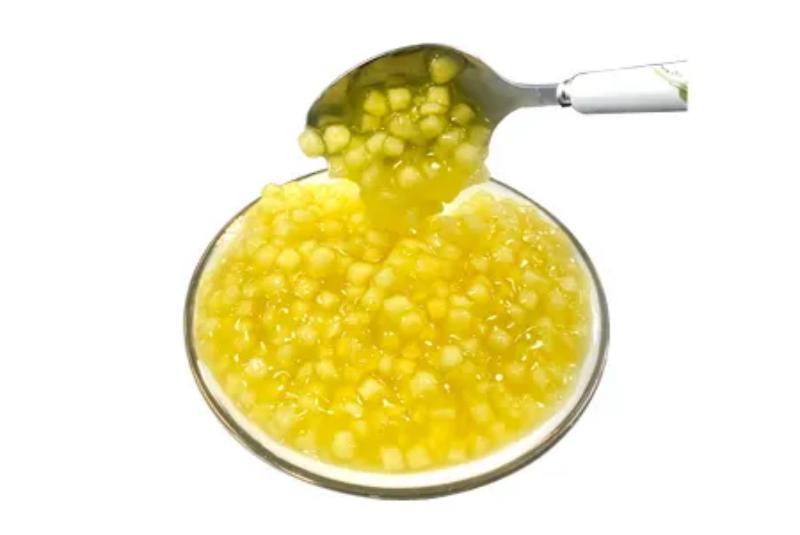
Food manufacturers should evaluate fruit fillings through practical application testing rather than relying only on ingredient specifications.
A proper baking test evaluates:
Filling movement during heating
Color retention
Texture after cooling
Interaction with dough or pastry
This helps determine whether the filling performs under real production conditions.
After baking, manufacturers should evaluate product quality during storage, including:
Texture changes
Moisture migration
Flavor retention
Filling separation
A reliable filling should maintain quality throughout the expected shelf life.
Industrial production requires fillings that work well with automated systems.
Important considerations include:
Pumpability
Filling speed
Nozzle compatibility
Consistent portion control
Working with experienced fruit filling manufacturers allows companies to develop fillings optimized for their equipment and processes.
The performance of bakery fruit fillings depends heavily on formulation technology.
High-quality fruit ingredients provide:
Natural flavor
Attractive color
Consistent fruit texture
Careful fruit processing helps preserve the characteristics consumers expect from premium bakery products.
Functional ingredients such as pectin, starches, and hydrocolloids help control:
Viscosity
Water retention
Heat stability
Texture consistency
The right balance ensures the filling remains stable without compromising natural fruit characteristics.
Sugar and acidity influence:
Taste profile
Gel structure
Product stability
Professional manufacturers optimize these parameters based on the fruit variety and bakery application.
Cost optimization does not always mean choosing the lowest-priced ingredient. Poor-quality fillings may increase production costs through:
Product waste
Filling leakage
Processing issues
Customer complaints
A better approach is evaluating total production value, including:
Ingredient performance
Production efficiency
Shelf-life stability
Consumer satisfaction
High-performance fruit fillings for baking can improve manufacturing efficiency and reduce long-term operational costs.
Yes. Specialized fruit fillings for baking are designed to withstand high temperatures while maintaining texture, shape, and fruit flavor inside pastries, pies, and other baked products.
Leakage can be reduced by optimizing viscosity, controlling moisture content, and selecting fillings specifically designed for high-temperature baking applications.
Many fruit fillings can be formulated for frozen applications with proper freeze-thaw stability to maintain texture and appearance after storage and thawing.
Selecting the right fruit filling for bakery products requires careful evaluation of technical performance, application requirements, and supplier capabilities. The ideal fruit fillings for baking should deliver consistent texture, excellent heat stability, and reliable processing performance.
For commercial bakeries, partnering with experienced fruit filling manufacturers provides access to customized formulations, professional technical support, and high-quality fruit ingredient solutions. With the right filling partner, manufacturers can create bakery products that combine attractive appearance, authentic fruit flavor, and consistent production results.
 How to Evaluate Bake-Stable Fruit Filling: Temperature, Viscosity and Shape RetentionJuly 31, 2026A high-quality bake-stable fruit filling should maintain its flavor, structure, and appearance throughout the entire baking process. The most important evaluation factors are temperature stability, vi...view
 Easy Cream Cheese Filling Recipe for Cakes, Pies and PastriesMay 15, 2026Cream cheese filling is one of the most versatile dessert components in modern baking. Smooth, rich, slightly tangy, and incredibly creamy, it adds depth and texture to cakes, pastries, pies, cupcakes...view
 How Cheese Filling Enhances Modern Bakery Products with Rich Flavor and Smooth TextureAugust 18, 2026Cheese filling now is widely used in baking, for its special taste and flavor. It can improve the taste of food, especially bakery products, by adding a creamy mouthfeel, rich dairy flavor, and consis...view
 The Salad Dressing Guide for Types, Uses, Ingredients and SelectionMay 15, 2026Salad dressing is more than just a condiment—it is the defining element that transforms a simple bowl of greens into a flavorful, marketable, and memorable dish. In today’s global food industry, the...view
 Types of Fruit Fillings for Cakes and Pastries: Bake-Stable, Whole-Fruit, Chopped and SmoothSeptember 8, 2026Fruit fillings for cakes and pastries are mainly divided into four categories: bake-stable fruit fillings, whole-fruit fillings, chopped fruit fillings, and smooth fruit fillings. Each type is designe...view
 How to Choose Baking IngredientsMay 15, 2026Choosing the right baking ingredients is one of the most critical decisions for any bakery, food manufacturer, or industrial production line. Whether you are developing cakes, bread, pastries, or froz...view